
At Reagan Companies, we offer a broad scope of risk management and insurance solutions in New York State and beyond.
Learn About UsExplore Solutions
Learn About
Reagan Companies
Reagan Companies has been an integral part of the Syracuse community since 1929. With a legacy rooted in Marcellus, NY, our agency extends its expertise across Central New York and beyond, reaching clients in over 15 states. Our team of dedicated risk managers leverages decades of experience to provide effective risk management and insurance solutions. Serving over 4,000 clients, we are committed to helping you make informed decisions for a more secure future.
Meet Our Team
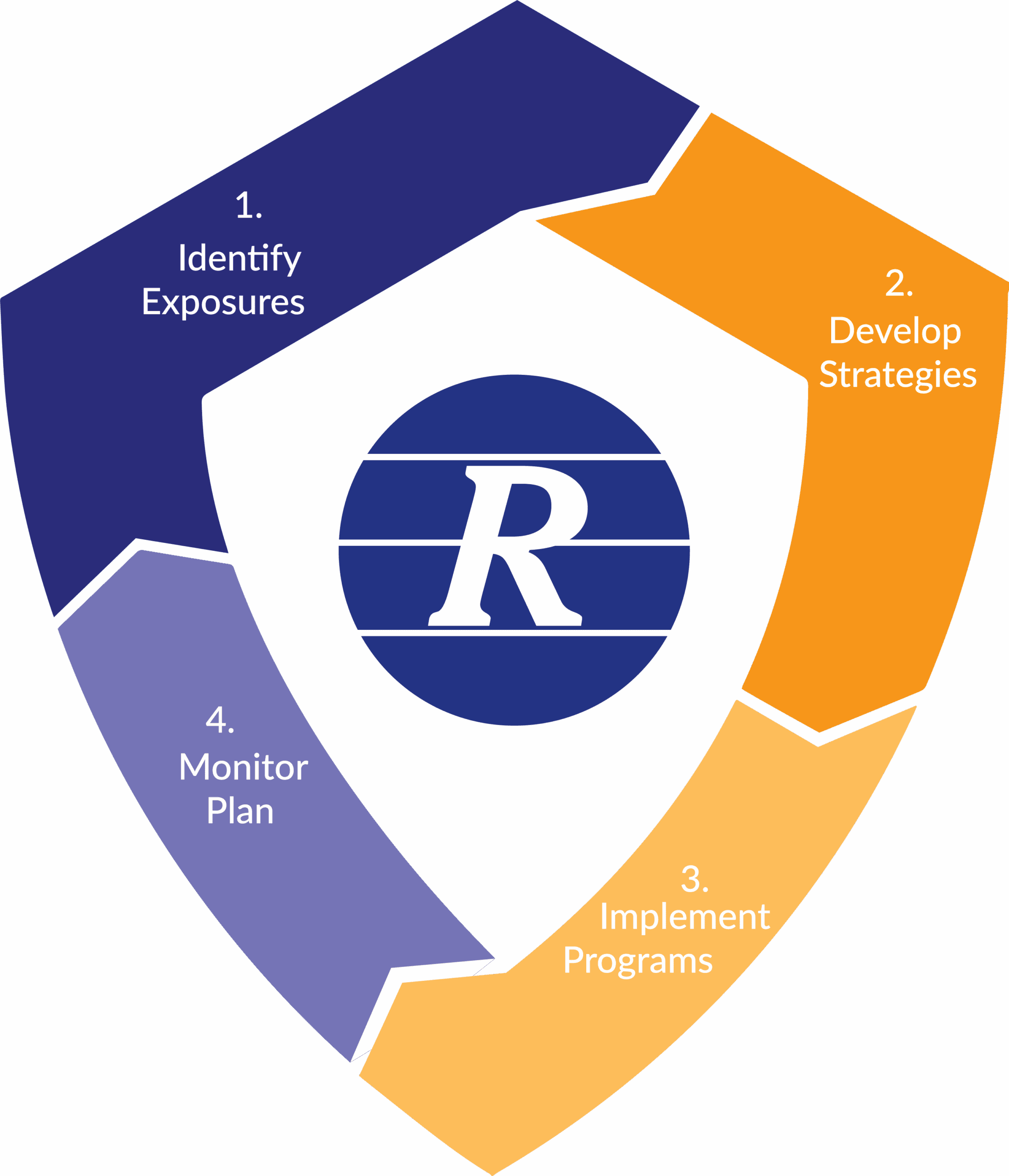
RiskShield Process
The RiskShield Process is a process utilized by the Reagan Companies to identify, understand, implement and monitor risk management strategies for you and your business. That means helping you uncover risk issues and exposures that have a significant and material impact on your bottom line before they become a problem. We do this in four devised steps.
Discover how Reagan Companies can assist you with your insurance needs in Central New York, across the Northeast, and beyond. Contact us today!
View Our PDF
Hear From Our Clients
At Reagan Companies, our culture speaks for itself. Check out these client testimonials to see what we mean.
Read More Reviews
“I’ve worked with Reagan on a daily basis for the last 9 years for our commercial policies and benefits, and everyone I’ve dealt with has made me feel like the only client they have at that particular moment. Very knowledgeable and helpful – highly recommended.”
Craig P.
“We have been with Reagan since 2009 and have been very satisfied. They keep us updated on the latest benefits policy regulations, answer our questions quickly and professionally, and have always been accessible when we reach out to them.”
Sharon J.
“I have been dealing with the Reagan Agency since 1983 and I have had nothing short of great experiences with them. They are top notch professionals that go above and beyond the call of duty to make sure things are taken care of correctly. I will be a customer of theirs for life.”
Peter P.

Pre-Hire Physical
Risk Factor
Are you about to hire your next workers' compensation claim? In an effort to get a position filled quickly, you may take shortcuts that could cost you thousands of dollars.
Solution
Prospective employees should be required to complete a pre-hire physical. A copy of the intended job description can then be given to the medical provider with the physical requirements of the position. This helps to ensure only those capable of doing the job are hired and keeps other employees safe.
Education and Injury Reporting
Risk Factor
Oftentimes employees don’t understand the workers' compensation process and may be afraid to report a claim for fear of losing their job or impacting a daily count of injury-free days that are tied to an incentive program.
Solution
Educate employees on the workers' compensation system. During the hiring process, consider explaining how workers' compensation coverage protects your employee when an injury occurs. Your employees should understand that it is their responsibility to report an injury immediately and follow the company’s guidelines for seeking medical attention. Explain your return to work policy and have your employees sign an agreement stating they understand the process.
Communication
Risk Factor
Your employee may become injured and you might be tempted to rely on someone else to communicate with them. As a result, your employee may be confused by the workers' compensation process and unsure where to turn.
Solution
You and your supervisors need to stay in constant communication with your employees. Your insurance broker can provide some coaching and guidance throughout the process. Above all, your employees should feel that you care about their injuries and that you will be involved in helping them recover. Your direct supervisors play a key role in this process and should be trained to effectively communicate with your employees throughout the injury.
Return to Work Program
Risk Factor
When your employees become injured, they may need time to recover. As an employer, you may be tempted to rely solely on the workers' compensation insurance company and/or your employee’s medical provider to communicate throughout the process. If you do, the process can become unnecessarily prolonged.
Solution
As the employer, let your insurance company and your employee’s medical provider know that you have a return to work program in place. Ask the medical provider to refer to the job description that has been provided for the injured employee. As soon as the employee is medically cleared, offer a light duty position and ask them to report to work. If needed, your employee can continue to receive treatment while they continue to recover.
Payroll Audits and EMR
Risk Factor
Statistically, your company’s Experience Modification Rate (EMR) has more than a 70% chance of being incorrect. Your EMR is a number used by insurance companies to gauge any past cost of injuries and future chances of risk. In addition, over 80% of payroll audits are done incorrectly. Both factors impact your workers' compensation coverage.
Solution
Trust your insurance advisor and have them assist and advocate during the annual payroll audit conducted by the insurance company. Your agent should also monitor all claims, but especially claims reserved over a $10,000 threshold. Larger claims should have a quarterly report prepared by your insurance agent to let you know the status of the claim. Your agent should work with your insurance company’s claims adjustor to close any claims as quickly as possible.
Medical Provider Communication
Risk Factor
Claims can remain open longer than needed due to poor communication between you and your employee’s medical provider. As a result, you may be unaware that your employee is well enough to return to work on a modified basis.
Solution
Get to know the doctors that are helping your employee heal. Your insurance broker should foster this relationship by assisting you in the selection of the medical provider prior to a claim. Meet with the medical provider, interview them, tour their facilities, ask them to tour your location, and explain your return to work program. Job descriptions can be provided to the medical provider and an agreement of services can be achieved. Once a claim takes place, a clear line of communication should be established so you are kept aware of your employee’s status.
Safety Training
Risk Factor
Sometimes employees are trained to do a job well, but are not trained to do their job safely. Many work-related injuries can be avoided by effective training.
Solution
Your insurance broker should be able to organize monthly training classes. Many insurance carriers offer training tools at no charge and your broker can help you utilize these tools to your advantage. For example, topics such as proper lifting techniques can be critical for many job functions. Also, using tools like payroll stuffers can be very effective.
OSHA Inspections
Risk Factor
Many employers are concerned about their next OSHA visit. Worried about citations and fines, employers see OSHA as the enemy. Sound familiar?
Solution
OSHA's On-site Consultation Program offers free and confidential safety and occupational health advice to small and medium-sized businesses in all states across the country, with priority given to high-hazard worksites. On-site Consultation services are separate from enforcement and do not result in penalties or citations. Consultants from state agencies or universities work with employers to identify workplace hazards, provide advice on compliance with OSHA standards, and assist in establishing injury and illness prevention programs.
Interactive Graphic
Click it. Read it. Cover it.
- Click on the hotspots.
- Discover your risks.
- Explore coverage options.
Not what you’re looking for?
Explore more interactive graphics.
Client Resources
Already a client of Reagan Companies? Visit our Service Center to make requests and manage your insurance.
Let’s Get Started
Contact Reagan Companies
"*" indicates required fields
Don’t like forms? Contact us at or email us.
